Share

Monday, September 2, 2013

Understanding Your Payslip


Understanding your Payslip

My friend has finished engineering and joined a company as a software developer a few weeks back. She had got her first salary and asked my help to understand her salary slip since she did n't have much idea about finance. I had faced the same situation when I started my first job and I thought if I share it as a blog post it will be useful for many people.

Here are the common components of salary slip in most companies:

Basic Salary - Basic salary is the fixed part of your compensation and it is fully taxable. It is the base criteria used for calculating many employee benefits like E.P.F and gratuity.
House Rent Allowance (HRA) - HRA is the amount paid by the company to meet your expenses for renting a house. Usually it is 50 percent of the basic salary. Certain percentage of HRA is exempted from tax if you produce rental receipts.
For HRA, least of the following will be exempted from tax:

  • HRA received
  • 50% of basic (40% for non-metros)
  • Rent paid in excess of 10% of basic

Conveyance Allowance - Conveyance allowance is the money paid to meet your expenses for commuting to office.
In India, conveyance allowance up to 9600 per year (800 per month) is not taxable.
Medical reimbursement - Medical reimbursement is the amount paid to meet your medical expenses. Medical reimbursement for up to 15000 per year (1250 per month) is not taxable in India. You have to submit bills at the end of the financial year or per quarter according to your company policy to get tax exemption.
LTA (Leave Travel Allowance)- LTA is the allowance paid by the company when you travel with your family on vacation. The travel expenses are exempted from tax if you provide bills. It can be claimed only twice in a block of 4 years.
Other Allowance or Flexible Allowance - Any other allowance that is not part of the above allowances. Some companies include medical and LTA also as part of the other allowance.

Here are the common deductions:
E.P.F - If your company is providing E.P.F benefit, 12 percent of basic salary is deducted as E.P.F contribution. It may not be applicable for many small companies where employee strength is less.
For more information about E.P.F, see my blog post Understanding EPF
Professional tax - Professional tax is the tax levied by state governments and the maximum limit is 2500 per year (208 per month)
Income tax - Income tax will be deducted according to the salary you are getting and it is levied by central government. it varies according to the Income tax slabs government fixes for each financial year.
Income in rupees and tax slabs for the financial year 2013-2014 for general tax payers and woman:

  1. 0 to 2,00,000 - No tax
  2. 2,00,001 to 5,00,000 - 10%
  3. 5,00,001 to 10,00,000 - 20%
  4. Above 10,00,000 - 30%

Your take home salary will be the sum of all this components less deductions. Suppose your annual package is 3,00000 per year.
You may think you will get 3,00000/12 = 25000 as your monthly take home salary. But in reality, your take home monthly salary will be your basic salary + HRA + conveyance allowance + medical+ L.T.A (If applicable)- deductions(Income tax + EPF+ Professional tax)

Read our Previous Post

Monday, August 26, 2013

How to check your PF balance online


how to check your PF balance online

You can check your Employee Provident Fund (E.P.F) balance online, if you know your PF account number. But all PF offices do not support this facility and you can check the PF balance only if your PF office supports this facility. Also, if your company has a separate trust for EPF you won't be able to check it online at EPFO website.

Here is the procedure to check the PF balance online:

1. Go to http://epfoservices.in/epfo/member_balance/member_balance_office_select.php

2. Select the state where your EPF office is located

3. Select your EPF office and the member balance information window will be displayed.


4. Enter your details in the member balance information. For example, if your PF number is KN/xxxxx/yyyyyy, KN indicates the state, xxxxx is the establishment code for your organization and yyyyyy is your PF number. Employee PF account number has five text boxes. The first two fields will be filled automatically and enter the remaining information as per the following steps.

a. Enter the xxxxx part of your PF number as the establishment code in the third text field.

b. Enter the extension number or fill it as 000 if there is no extension number in the fourth text field.

c. Enter the yyyyyy part of your PF account number in the fifth text field.

d. Enter your name as per EPFO records.

e. Enter your mobile number.

f. Read the terms and conditions and click agree if you are fine with it

g. Click Submit.

You PF balance information will be sent to you as SMS.

For detailed information about EPF, read my blog post http://sreejithsblog.blogspot.in/2013/05/understanding-epf.html


Read our Previous Post

Monday, August 19, 2013

Neelakasham Pachakadal Chuvanna Bhoomi - A traveller's delight


Neelakasham Pachakadal Chuvanna Bhoomi (English: Blue Skies, Green Waters, Red Earth) is a brilliant attempt by Samir Thair to make a road trip movie for the first time in Malayalam cinema. Supported by Hashir Mohammad's brilliant script and excellent visuals by Gireesh Gangadharan the movie has turned out as a beautiful visual treat.Dulkar Salman has done a superb job as Kasi-the lead actor. The story is about Kasi - a youngster who completed his engineering and Suni - Kasi's intimate friend and their journey from Kerala to North Eastern India on bikes. Their warm friendship and comradarie is beautifully captured in the film. Through this journey with out any specific aim, Kasi wants to get over his past relationship.( I too had a similar experience some time back traveling with a friend on a bike who was in the same state as Kasi :-) )

On their way, they see and feel the real India through the people they meet during the journey.Inspired by the people he had met during the journey, he decided to search for his lover Assi- a young woman from Nagaland - who came to Kerala to study engineering in the same college where Kasi and Suni studied. They were attacked by thieves, got into a group of hippies , captured by Naxals, witnessed the riots in Assam, enjoyed the song of sadhus and consumed bhang with them, experienced the anger of Naga's and learn more about themselves and India. Along with the journey, the film progresses though the college life of Kasi and Assi and their struggle to get the approval from Kasi's orthodox family who first accepted their love but succumbed to pressures of the orthodox society they were part of. Kasi's college life is almost the same story of many youngsters in Kerala. The idealistic left activism they cherish as students and the confusion they face later in the real life when they have to work as part of the same system they opposed once. The confusion of Kasi about his identity is actually the same confusion many experience when they are constantly reminded about their identity by the society even though they had came out of their traditional beliefs and customs. The naxal village portrayed in the films throws some light on the threats of crony capitalism on the life of villagers in India and their struggle to fight against it to protect their homeland. Finally after all his struggles Kasi got back his sweet heart from Nagaland and starts his return journey and the film ends. I felt that the climax would have been more powerful than the ordinary climax that was shown in the movie.

The movie is a delight to watch for a travel enthusiast who can identify with the joy of seeing new places and cherish the experience of a long journey. The film encourages every traveler to explore the new horizons and seek the thrill and excitement that every journey offers. Exploring India is a great learning experience and makes you a much better person. The visuals are beautiful and as a unique attempt to make road trip as a theme the effort is commendable.


The film has it's own weaknesses too. I felt that some scenes in the second half were dragging. The climax was just ordinary nothing special. There was more scope for covering the diversity and the variety that India offers, but may be two and half hours may not be a sufficient.

I heard from my friend that Hashir Mohammad- the script writer of the movie, actually traveled to North East immediately after finishing his studies on a bike and got inspired to make this movie :-).
Read our Previous Post

Friday, August 16, 2013

Common Banking Interview Questions


There are a lot of people applying for jobs in public sector banks in India and the competitive examination is also tough to crack. State bank conducts separate examination to recruit staff and other banks recruit through a common exam known as IBPS.

Here are some of the commonly asked questions related to banking that helps you to prepare for the interview:

What is repo rate ?

Repo rate is the interest rate at which Reserve Bank of India (RBI) lends money to the commercial banks for a short term against securities. Suppose you are a small shop owner (commerical bank) who buys goods from a whole saler in debt keeping some thing valuable as collateral. In return, you have to pay a higher price mutually agreed between both of you later and take your collateral back. The profit the wholesaler takes from you can be called as repo rate.

Current repo rate is 8.5 percent.

Note: These values vary according to RBI policy.

What is reverse repo rate ?

Reverse repo rate is the rate at which commercial banks lend money to RBI

Suppose the whole-saler is in shortage of goods and you have stocks of extra goods and you are willing to sell the goods to the whole saler. The rate at which you give goods to the whole saler can be called as reverse repo rate.

Current reverse repo rate is 7.5 percent


What is bank rate ?

Bank rate is the interest charged by RBI on loans by commercial banks. Here collateral is not required.
The current rate is about 6.0 percent.


What is CRR ?

CRR is the ratio of funds banks have to keep with Reserve Bank as per norms. If CRR ratio is less banks will have more money to conduct business.

Current CRR is 6 percent

What is NEFT ?

There are two modes for transferring funds from one bank account to another account in India using electronic fund transfer.
They are National Electronic Fund Transfer (NEFT) and Real Time Gross Settlement (RTGS). In NEFT transactions are processed in batches and in RTGS the transaction is done immediately. So, RTGS is faster than NEFT.


Note: I am not an expert in banking domain. I collected these information when my sister was preparing for the IBPS P.O interview :-)


Read our Previous Post

Wednesday, July 10, 2013

Bangalore Bus Tips for Non Bangaloreans


If you are new to Bangalore and you don't know to read Kannada initially you will find it a bit difficult to go around by bus because there are route numbers and bus boards will have only Kannada boards. It is a good idea to learn Kannada but it will take time. There are three important bus stations in Bangalore and you can see buses to these three places from most places in Bangalore.

  • Majestic Bus Stand also known as Kempe Gowda Bus Station or KBS (ಕೆಂಪ ಗೌಡ ಬಸ್ ನಿಲ್ದಾಣ) - This is the major bus stand in Bangalore and you can get buses to most of the places around Bangalore from Majestic bus stand. ಕೆಂಪ ಗೌಡ ಬಸ್ ನಿಲ್ದಾಣ(Kempe Gowda Bus Nildana) means Kempe Gowda Bus Station and the bus board will also have the bus number. ಕೆಂಪ ಗೌಡ ಬಸ್ ನಿಲ್ದಾಣ is not very difficult to memorize if you observe the pattern. The first letter ka is similar to ta (ठ) in Hindi and the first letter of ನಿಲ್ದಾಣ is a slight variation of na (न) in Hindi. Keralites can easily recognize the la sound in niladana. If you are still not able to recognize ask for a bus to Majestic because I really doubt how many people know the actual name Kempe Gowda Bus Station.

    Majestic Hogutha ? (will it go to Majestic ) will work most of the time. If you lost your way there is an unwritten rule in Bangalore that then you should catch the next bus to Majestic :-). There is some logic in it because you will get a bus to almost any place in Bangalore from Majestic bus stand.
  • K.R Market (ಕೆಆರ್ ಮಾರ್ಕಟ್) - K.R Market is the next major bus stand after Majestic and it is the major market place in Bangalore. The bus board will be written as ಕೆಆರ್ ಮಾರ್ಕಟ್ (K R MARKET). As mentioned earlier you should be able to recognize Ka easily and the last letter ttu (ಟ್) you can easily remember.
  • Shivaji Nagar (ಶಿವಾಜಿ ನಗರ್) - The third important bus stand is Shivaji Nagar (ಶಿವಾಜಿ ನಗರ್). It is also very easy to remember if you observe the pattern. The first letter sha is a variant of श in Hindi.
Some more major destinations:
  • Shanthi Nagar- ಶಾಂತಿ ನಗರ್
  • Banashankari- ಬನಶಂಕರಿ
  • Indira Nagar- ಇಂದಿರಾ ನಗರ್
  • Marthahalli- ಮರ್ಥಹಳ್ಳಿ
I am also listing a few bus route numbers that may help:
  • Attibele- Kempegowda Bus Station -360-B
  • Electronics City- Kempegowda Bus Station -356-C
  • Narayana Hrudayalaya- Kempegowda Bus Station -356-N
  • Banashankari -Hebbal 500-A
  • I T P L Banashankari 500-C
  • Silk Board Hebbal 500-D
  • Marathahalli -Kempegowda Bus Station -333-J
  • I T P L -Kempegowda Bus Station -333-P
  • Kadugodi -Nagarbhavi -333-T
  • Kadugodi -Kempegowda Bus Station -335-E
  • Bannerghatta National Park- Kempegowda Bus Station 365
  • Kormangala- Kempegowda Bus Station 171
To find all the bus routes you can see the following links: http://www.mybmtc.com/ http://en.wikipedia.org/wiki/List_of_Metropolitan_bus_routes_in_Bangalore http://bangalore.citizenmatters.in/articles/1919-bengaluru-bmtc-bus-information http://www.narasimhadatta.info/bmtc_query.html
Read our Previous Post

Tuesday, July 9, 2013

List of SBI branches with PPF facility in Bangalore


If you are in Bangalore the following SBI branches support Public Provident Fund (PPF) facility as per my knowledge. (It is not a comprehensive list and I will update it whenever I receive more information)
  • SBI Koramangala
  • SBI Hulimavu
  • SBI Bannerghatta road
  • SBI HAL
  • SBI Richard town
  • SBI Indira Nagar
  • SBI Sarjapura Road
  • SBI Belandur
  • SBI Banashankari 2 stage
  • SBI ITPL
  • SBI Kempa Gowda Road, Bangalore Main Branch
  • SBI Basaveshwarnagar
  • SBI Cantonement, St Marks Road
  • SBI Sanjay Nagar
  • SBI Jeevan Bheema Nagar
  • SBI Hegde Nagar
  • SBI BTM (Mico Layout)
  • SBI NAL Branch
  • SBI JP Nagar Branch

For more information about how to open a PPF account with SBI, see my blog post :

http://sreejithsblog.blogspot.in/2012/07/how-to-open-ppf-account-with-sbi.html


Read our Previous Post

Wednesday, June 19, 2013

Things you should know before buying Gold Jewellery


I am not a fan of Gold and I consider wearing gold as a weird thing. I don't consider Gold more valuable than some other element like Iron in the periodic table, but we live in a country where gold traditionally plays a major role in every important event in your life. During my engagement, very reluctantly I bought a ring for me. I chose the smallest ring that one might have bought for engagement and my wife still complains about it :-). Again there may be numerous occasions where you have to buy gold for your sister, your nephew and so on even if you don't like.

Since I had been to jewellery shops a couple of times to buy gold now, I learned a few things about purchasing Gold.

Here are some of the points I learned:

What is Karat? Why do the jewellers mention 22 Karat ?

24 Karat is pure gold, but it is too soft and ornaments made out of it may not last longer. In India what we get from jewellery is usually 22 Karat Gold. That means it contains a certain percentage of other metals like Cadmium and Copper. 22 Karat means it contains (22/24) * 100 = 91.6 percentage Gold and remaining percentage contains other metals. That is why it is known as 916 Gold.

Suppose it is 21 Karat Gold, then it contains 21/24 *100 =87.5 percentage Gold. So to get more value, make sure that you are buying 22 Karat Gold.

What is BIS certification?

To ensure the purity of Gold and to prevent fraud, hallmarking Scheme was launched by Bureau of Indian Standards (BIS). The BIS certified jewellers can get their jewellery hallmarked from any of the BIS recognized assaying and hallmarking Center.
For example 916 hallmark from BIS ensures that it contains 91.6 percentage Gold or 22 Karat.
For more information see:

http://www.bis.org.in/cert/hallbiscert.htm

How do Jewellers Calculate Price of Gold ?
Jewellery price include the following:
1. Price of gold as per market rate for the day * number of grams of gold
2. Making charges
3. Wastage charges
4. VAT
Suppose you are buying jewellery worth 8gm gold and the market price for gold is 20000 for 8gms.
The price of jewellery= 20000+ making charges+ wastage charges+ VAT

What are Wastage Charges?

Jewellers claim that a certain percentage of Gold is lost when you make ornaments from Gold. I don't buy this argument since you are using machinery to make jewels these days and also even if there is a Goldsmith I heard that the Goldsmith can recover a substantial percentage of Gold wasted while manufacturing. Even if Gold is wasted, it may be minimal.

Unfortunately we have to pay for this wastage charge since there is no norm from government about it.The wastage charges vary from jewellery to jewellery and it is between 8 to 20 percent. It is where the jewellers make huge profit. If they are charging more than 10-12 percent you should negotiate to reduce the price. It may be possible to get it reduced by 2-3 percentages if you are making bulk purchases.

What are Making Charges?


Making charges are the cost involved in making jewellery from pure gold. It includes the price of additional metals and labor charges of the goldsmith. Most jewellers will club making charge and wastage charge together and name it as value addition charge. Some may charge it separately. Here also you can negotiate to reduce the price.

What is VAT ?

Value Added Tax(VAT) is a tax on the final consumption of goods or services and is ultimately borne by the consumer.It is usually charged at 1 percent for precious metals like Gold.

Some Important Points to Keep in Mind:

Jewellery is just another business- Don't go to a jewellery shop with the mindset that you are entering a temple. Ask the price of every item in detail like making charge and wastage charge. If you are a regular visitor or purchase in larger quantity negotiate on making charge and wastage charge. The better you negotiate the more benefit you will get. I had my own experience when my relative negotiated in a jewellery shop they said you are the first guy who negotiates in a jewellery shop like you are going to a vegetable market and they tried everything to make him feel ashamed. But he insisted and finally he succeeded to get a reduced price :-)

Buy gold only from reputed jewellers or jewellers you trust- All jewelers may not be selling 22 Karat Gold while charging you the price for 22 Karat Gold. Ensure that the 916 hallmark is present in each item you buy.

Check the market price and find out the making charges before you go to a jewellery shop - It is better to check that days market price before you go to a jewellery shop. It would be good if you can find out about the making charges also.
Read our Previous Post

Wednesday, June 12, 2013

Getting into Technical Writing


A few years back, when I used to say I work as a technical writer many people didn't know and some of them used to raise their eye brows. I had a difficult time explaining technical writing to those confused souls around. I am not sure whether we should thank the training companies or the rumors about handsome packages offered for technical writers. But for some reason, these days I am getting a lot of queries from people from different sections of the society about technical writing. Most of them wanted to know how to get into technical writing for their spouses or cousins. So I am dedicating this post to all those enthusiastic individuals and trying to answer some of the common queries:

What does a technical writer do?

As a technical writer in a software company, you need to write documentation for different software and hardware products. You need to go through engineering specifications, gather information from subject matter experts, research about complex details and develop that information into clear and concise instructions that is useful for end users of the product. Technical writers have to create a variety of documentation outputs including user guides, online help, and installation guides depending on the requirements of users.

How can I get into technical writing? Do I need to join a course?

Like most of the other careers, technical writing can be learned on the job. In India very few universities provides courses in technical communication and if you have a basic degree, that is sufficient. But sometimes if you have a degree in journalism, English literature, or computer science it will give you an added advantage depending on the company where you apply. If you have no idea about technical writing, doing a technical writing course from a private institute may help you. But I wonder whether the institutes that charges you sky rocketing fees are worth joining. If you can learn Java or CCNA training course for 10000-20000 rupees (I have done CCNA and Java training courses and CCNA course definitely requires more expensive infrastructure), I can’t understand the logic in charging 35000-75000 rupees for a technical writing course. Most technical writing institutes are just making hay while Sun shines.

Most institutes provide you an overview of technical writing and teach one or two tools used by technical writers and most of these things you can learn by yourself. If you do a Google search, you can get a fair idea about technical writing and common tools that are used in technical writing. You can download trial versions of the tools and explore them in your own. Most commonly used authoring tools include Adobe Framemaker or Arbortext Editor for authoring user manuals and Robohelp for online help generation.Again, tools will be different from company to company and your mastery over one tool may not give you a lot of brownie points when you are searching for a job. Tools you can learn by practice but developing good writing skills requires a lot of effort and time. So technical writing may not be a good option for you if your writing skills are below average.


What are the necessary skills required for a technical writer?

The primary skill you require is an ability to learn new technologies quickly and write about the technologies in simple English for end users. You should have an aptitude for research that will help you to develop the primary information you receive from subject matter experts and given in the engineering documents into a form of content useful for end users. Good communication skills will give you a lot of advantage since you needs to interact with subject matter experts to collect information. Also, you should be familiar with the common authoring tools used by technical writers.

I have a fair idea about technical writing and I have the necessary skills, but I am not seeing many openings in newspapers or job sites. How can I apply for a technical writing job?

Technical writing community is growing in India but still it is relatively small compared to the other professions and technical writing openings are mostly shared with in the community.
Subscribe to Technical Writers of India (twin-join@user.itconsult.co.uk) and Society of Technical Communication India Chapter (stcindia@googlegroups.com) mailing lists for job openings. You can also check the jobs posted at Technical Writers of India Website
Getting into a big company is most of the time difficult if you lack experience, but many small companies hires technical writers without experience as trainees. So, if you are a fresher try applying in small companies and work for two or three years and then try in a big company.

I got an interview call from company A, but I have no idea how to prepare for the interview. What should I do ?

In most companies there will be a written test to assess your writing skills followed by one or two rounds of interview. The written test may have questions to test your knowledge about English grammar and also a few scenarios to see how well you can express your ideas in a layman’s language using technical writing principles. Based on your performance in the written test, you may be called for an interview. It would be good if you carry some work samples with you or you can point to your blog or content you authored online. The interviewer may ask you questions about the sample projects you have done, the process you followed or the tools you had used. If you are a fresher, expect questions from the subjects you studied in college. Try to learn about the company you are applying and the domain they are working. You can expect a few questions about the product domain of the company.


Finally I wanted to give some advice for those who just wanted to get into technical writing only because they heard from some body that it is a cake walk and pay handsomely.

Technical writing is not rocket science but it is not everyone’s cup of tea – True, technical writing is not rocket science and it can be learned. If you are willing to learn new technologies and you can write about technology in a simple language you can become a technical writer. But for all those creative geniuses, there is not much scope for creative writing in technical writing. Technical writing is only considered as a necessary evil by most engineers and you should be prepared to do a thankless job in many situations. Technical writer's time is mostly spend on routine tasks like interacting with subject matter experts, following up with engineers to get the content reviewed and fixing the errors in the documents. If you are working for a services company most of the time you have to work on unrealistic time lines to meet deadlines and the indefinite wait to get information from busy subject matter experts will test your patience.

Growth Opportunities are limited in technical writing- In India we give a lot of importance to titles and the general notion is one should become a manager in a few years. Definitely you can grow as a professional by learning new technologies, developing expertise in your domain and the processes related to your company as a technical writer. But, if you are too ambitious and want to climb the corporate ladder immediately you may be disappointed after a few years in technical writing. Growth opportunities for a technical writer are definitely less compared to other professions.
Some useful links:

Some books I found useful as a beginner:
  • Read me first! A Style Guide for the Computer Industry by Sun Technical Publications
  • Developing Quality Technical Information: A Handbook for Writers and Editors by IBM
  • The Elements of Style by Strunk and White

Read our Previous Post

Tuesday, June 4, 2013

Tips to Pass CCNA examination


I have cleared CCNA Routing and Switching examination last month and I found it a bit difficult to crack because I am attempting an examination after long time. Here are my takeaways from attempting the exam.

What is CCNA - My trainer asked this question to us in the first class. According to my trainer, CCNA is an examination that tests your ability to setup, troubleshoot and maintain a small network. It covers the basics of routing, switching and other fundamentals of networking. Whatever be the ideal definition, it is simply like another examination where it tests how better prepared you are for the examination and how do you manage time to answer questions than how much you know or your capability to set up and maintain a network. CCNA is an online exam of 2 hours (for non-native English speakers) consists of around 50 questions. The questions are a mix of theory and practical simulations. You may get 48-55 questions out of which three or four will be simulations. To pass the exam you need to get a strange 825 out of 1000. May be the people who first designed this exam got 825 when they tried it out :-)

If you have time it is better to join an institute and study even though you are aware of the concepts. It will help you to go through all the topics in a systematic manner. If you do self-study, sometimes you may not go through the portions where you lack interest. It would be ideal to attend the examination immediately after the training if you want to pass the exam. There are two reasons for this. One reason is you may forget what you have learned. The other reason is you need to do the simulation part really faster if you want to pass the exam and it would be ideal if you appear the exam after regular practice for some time. For practice you can download Cisco Packet Tracer.

If you want to pass the exam, set aside all your preferences. Even if you don't like switching part a lot like the boring how to find a route bridge, designated port so on remember for some reason Cisco loves switches a lot. May be because it gave those billions of dollars what they have now in the bank. Expect a lot of questions from switching and be prepared for that. Even if you work on Cisco routers set aside some time and study all the portions including concepts in switching. Some of the other important portions include sub-netting, access control lists, EIGRP, RIP, and OSPF.

One of the important parts of the exam is simulations. How do you handle the simulations decide if you pass or not. Usually there are 3-4 simulation questions. Try to finish your theory questions faster and then attempt simulations. Even if you do one simulation wrong the chances of passing the examination is rare. Practice mock tests and don't attempt the examination till you score more than 90 percent in the mock examination.
See 9tut.com which is an excellent resource for CCNA sample questions and simulations:

http://www.9tut.com

I have referred the CCNA book by Todd Lamle that explains concepts in a simple manner. Go through all the questions given at the end of each chapter in the book because many of them are repeatedly seen in the CCNA examination.

Lessons that I can share:
1. Study for one month dedicatedly and do rigorous practice for simulations to improve speed.
2. Go through mock tests.
3. Finish the theory questions as fast as possible so that you get enough time to attempt simulations.
4. CCNA is like just another examination where how well prepared you are for the exam is more important than how much you know.
5. Time management is very important since you have to attempt 50 questions and 3-4 simulations within 2 hours.


Read our Previous Post

Wednesday, May 29, 2013

Understanding EPF


What is EPF ?

Most of us who are working in the private sector may have heard about EPF. The answer most of the time comes to our mind is "Oh that thing, every month some amount of money is deducted from my salary, that is EPF right? ". Even if you have some idea about it let us explore it in a little bit detail. EPF or (Employee Provident Fund) is a retirement fund created under Employee's provident Fund act 1952 to help employees to generate some kind of savings when they retire. Every month 12 percent of your basic salary is deducted from your salary and kept it in a PF account and it is maintained by the Employees Provident Fund Oraganization (EPFO). Your employer also needs to contribute the same amount to the PF account. Government gives you an interest ( currently 8.5 percent) for keeping the money in PF account.

So things are simple right? Not so simple. In reality, out of 12 percent of your employer contribution, minimum of 8.33 percent or 541 which ever is lesser will go to a pension account known as Employee Pension Scheme (EPS). The interest rates for EPF and EPS are calculated separately on annually compound basis.


How to check my PF balance online ?

You can check your EPF account balance at the following link:
http://epfoservices.in/epfo/member_balance/member_balance_office_select.php

You need to provide your PF office location, PF number, your name, and mobile number to get the EPF balance information.


I heard that my company has a separate PF trust and I wonder what it is ?

It is called an exempted PF trust. Some companies are allowed by the government to form their own PF trust after getting approval from EPFO provided they satisfy some terms and conditions. They have to provide the same rate of return given by EPFO.


I have changed my job and I wanted to tranfer my EPF to my new company. How can I do that? What should I do to transfer EPS ?

To transfer EPF you need to submit the filled up form 13 to your new employer and they will forward it to the Regional Provident Fund office. As per my knowledge, once you transfer the PF amount the EPS will be automatically taken care of.
You can download form 13 from the EPFO website:


http://www.epfindia.gov.in/forms/13revised.PDF


My PF transfer is not happening even after several months, what to do now ?

Welcome to common man's India. That is the way India bureaucracy works most of the time. Fortunately we have RTI now and for most people it worked wonders.

Here is an excellent post by Manish on how to file an RTI for EPF transfer or withdrawal:


http://www.jagoinvestor.com/2012/03/rti-for-epf-withdrawal-or-transfer.html


Can I take a loan from EPF ?

Answer is yes. You can take a loan from EPF for the following purposes:

1. Purchase of a plot for constructing a house
2. Purchasing a home/flat
2. Home Improvement
4. Marriage of children, self, daughter, sister
5. Repaying home loan
6. Loss of Job
7. Higher education of children
8. Purchasing equipment for physically disabled family member

To take a loan, you need to submit form 31 and also submit the required supporting documents.

http://www.epfindia.gov.in/forms/FORMS_Latest/Form31.PDF


Can I increase my contribution to EPF ?

Yes you can increase your contribution to EPF voluntarily. But the companies contribution remains the same as 12 percent.


Read our Previous Post

Tuesday, January 8, 2013

How to get marriage certificate in Kerala


I recently registered my marriage and got my marriage certificate after a few day's effort in Kerala. I am sharing my learning through this post.

As per Kerala Government order in 2008, all marriages happening after 2008 should be mandatory registered under the respective local body (Panchayath, Municipality or Corporation) where the marriage was held. For example if your marriage occurred in a temple under Aluva Municipality you should register your marriage under Aluva Municipality. Registration will happen only between 11 AM and 3 PM. So, if you go there some other time you may have to go again.

Procedure varies according to the time period you are registering after the marriage.

With in 45 days- As per rules you should ideally register your marriage with in 45 days. If you are registering your marriage with in 45 days you need the following documents.
  1. Filled up application form with one duplicate copy. You need to affix two photos each of bride and bridegroom.
  2. A certificate from the religious institution where marriage was held.
  3. Copy of Marriage Invitation (Good to have.)
  4. 2 copies of certificate (SSLC book, Passport or Voters ID) to prove age of bride and bridegroom attested by a gazetted officer.

Once you have all the documents, both bride and bridegroom need to go to the respective local body office with two witnesses. Witnesses should have identity proof. Fees for the registration is 10 rupees.

It may not take much time to complete the proceedings and will get your marriage certificate, but all depends on the official you are dealing with :-). If you are lucky you will get it with in one day. As per rules you should get it with in 5 days after submitting the application.


With in 45 days and 1 year - The more delay you make proceedings become tougher. If you are registering your marriage with in 45 days and 1 year you need the following documents.

  1. Filled up application form with one duplicate copy. You need to affix two photos each of bride and bridegroom. In addition you need to get both forms attested by a gazetted officer , MLA, MP or member of the local body. The same person should attest both forms.
  2. A certificate from the religious institution where marriage was held.
  3. Copy of Marriage Invitation (Good to have.)
  4. 2 copies of certificate (SSLC book, Passport or Voters ID) to prove age of bride and bridegroom attested by a gazetted officer.
  5. One application in white paper with 5 rupees stamp mentioning the reason for delay.

Once you have all the documents, both bride and bridegroom need to go to the respective local body office with two witnesses. Witnesses should have identity proof. Fees for the registration is 100 rupees. My situation was this. It took me 3-4 days to get it because I was not clear about the procedures and the officials were not helping much.

After 1 year - After 1 year proceedings become more tougher. You need the approval from the registrar general at the district level and it may take more time. If you are registering your marriage after 1 year you need the following documents.

  1. Filled up application form with two duplicate copies. You need to affix three photos each of bride and bridegroom. In addition you need to get all the three forms attested by a gazetted officer, MLA, MP or member of the local body. The same officer should attest all the forms.
  2. A certificate from the religious institution where marriage was held.
  3. Copy of Marriage Invitation (Good to have.)
  4. 2 copies of certificate (SSLC book, Passport or Voters ID) to prove age of bride and bridegroom attested by a gazetted officer.
  5. One application in white paper with 5 rupees stamp mentioning the reason for delay.

Once you have all the documents, both bride and bridegroom need to go to the respective local body office with two witnesses. Witnesses should have identity proof. Fees for the registration is 250 rupees. It may take more time because one copy needs to be sent to the district registrar general and needs his approval.


The detailed government order you can see here:

http://www.go.lsgkerala.gov.in/files/gz2008229_6397.pdf


Kerala government says you can apply online but detailed procedures are not listed any where.
Read our Previous Post

Thursday, July 26, 2012

How to open a PPF account with SBI


If you are a salaried employee,  Public Provident Fund (PPF)  is one of the best debt instruments available for investment in India and it is tax free. You can open the PPF account in selected branches of SBI, associate banks of SBI and ICICI bank.

I was aware about the benefits of opening a PPF account but many times I postponed it. Finally I decided to do it some how and opened an account last week.

 Here is the procedure for opening the PPF account.

Prerequisites:
  • Two passport size photos
  • original  address proof  document and 2 copies
  • original PAN card  and 2 copies.

Note: For address proof  Passport, Driving License or Voters ID will be sufficient.

  1.  Go to a SBI branch that supports the facility to open a PPF account and get the PPF account opening forms(I have listed the SBI branch offices in Bangalore that supports PPF at the end of the post) . You need to fill up 2 forms. One for account opening and second one for the nomination (nomination form is not mandatory I guess) .You will also get a pay-in-slip for payment. Affix your photo on the account opening form. Witness signatures are required on the nomination form.
  2.  Submit the forms to the bank official. Once you submt the filled up forms, a bank official will verify the copies with the originals and return the forms to you.  They will  direct you to the counter for opening the account.
  3.  Submit the forms and document copies in the counter for opening account. You will be issued a PPF account number and forms will be returned to you with the account number.
  4.  Remit your payment against it using the pay-in-slip for PPF account and collect the receipt from the cashier. Minimum amount you required  to open a PPF account is 500 rupees. 
  5. Show the payment receipt to the counter for opening account  and  the bank official will issue a pass book like your normal SB account passbook and they will collect the forms from you and keep it in the bank.

PPF investments are eligible for tax deductions. To claim income deductions, you can take a copy of the PPF passbook for the transactions for the financial year and then submit it to the authorities.

Tips: Many people don't open a PPF thinking that it is painful to visit the bank each time when you have to make a payment. Be smart, times have changed. Now you can pay  online even if you don't have a SBI account. I don't have any SBI savings account but I am able to transfer money from my Citi bank account to PPF account by adding my PPF account as a payee in my account.

If you are still thinking about opening an account read this excellent post from Manish about why we should open a PPF account.
http://www.jagoinvestor.com/2009/08/why-to-open-ppf-account-even-if-you.html 

If you don't know about what is a PPF account, see this link : http://www.jagoinvestor.com/2008/04/providend-fund.html

If you are in Bangalore the following banks support PPF facility as per my knowledge. (It is not a comprehensive list and I will update it whenever I receive more information)
  • SBI Koramangala
  • SBI Hulimavu
  • SBI Bannerghatta road
  • SBI HAL
  • SBI Richard town
  • SBI Indira Nagar
  • SBI Sarjapura Road
  • SBI Belandur
  • SBI Banashankari 2 stage
  • SBI ITPL
  • SBI Kempa Gowda Road, Bangalore Main Branch
  • SBI Basaveshwarnagar
  • SBI Cantonement, St Marks Road
  • SBI Sanjay Nagar
  • SBI Jeevan Bheema Nagar
  • SBI Hegde Nagar
  • SBI BTM (Mico Layout)
  • SBI NAL Branch
  • SBI JP Nagar Branch


Now you can also open PPF accounts with ICICI bank at selected branches.
In Bangalore ICICI M G Road branch offers PPF facility. For the complete list of ICICI bank branches that supports PPF facility see the following weblink:
http://www.icicibank.com/online-services/public-provident-fund/designated-branches.html


Read our Previous Post

Saturday, November 26, 2011

Retrospective from Raichur


Two days of service for children from rural Karnataka, a lot of fun with a fantastic team bursting with enthusiasm , a trip to the historic Thungabadra river that witnessed the rise and fall of Vijayanagara empire , satisfaction that you were part of making a small difference in the life of a few children - all this made my trip as part of Project Samudaya to Raichur a unique experience.


Raichur, part of North Karnataka, is a small town that is 409 km away from Bangalore. Our plan is to conduct a health check up camp for about 1200 children from villages around Raichur. Raichur was worsly affected by the floods occurred in 2009 and the villages were almost destroyed. Cisco as part of project Samudaya adopted these schools around the area and also built houses for people whose houses were destroyed. This was the last program organized by Cisco in Raichur as part of project Samudaya. We started in Nanded express from Bangalore with a team of around 60 people. After a few minutes in the train I realized that I am in the company of a lot of energetic exciting people and all of a sudden the initial hesitation due to unfamiliarity went away.

We had a few briefings in the train with our team members and lead and yes you can't help attending meetings even in a trip :-). The whole trip was very well planned from the beginning and the facilities provided and co-ordination was excellent. As the train was late we reached Raichur by 10.00 AM and had to rush to the place after breakfast at hotel Kubera.

Day1

Our group of about 15 volunteers went to Thalmari a village about 40 kilometers far from Raichur. The destination was Kannada primary school Thalmari to conduct an eye check up camp. A team of refractionists accompanied us in the cab. The cab was going through the fields of cotton and paddy fields through the dry village road. After a while the Sun flower fields compensated for the journey through the bad road. We reached the school by 11.45 and rushed to set up the room and chairs for refractionists. We first screened children from 1st, 2nd and 3rd. Gireesha Shankar , Divya and Chitra were with me in the team and Satish joined later. Some children started crying after seeing us thinking we were there for vaccination :-). My job was most of the time to manage kids and noting down their names and issues after the initial screening. I was polishing my broken Kannada and most of the time it worked :-).
After the screening a list of children having issues with eye sight were identified and we handed over the list to the refractionists.

We had lunch followed by a meeting in the school where teachers and children expressed their thanks for conducting the check up.
In the evening while coming back we visited the Panchamuki Anjaneya temple. Reached back in Raichur by 7PM and roamed around Raichur town for some time with my friend Gireesh. While coming back we also met our friends roaming around the city.


Day2

The second day started very early. We started around 8.15 AM from Raichur. Our destination was the same school at Thalmari.
On the way we couldn't keep going seeing the beautiful Sun flower fields and there was a photo session by woman too :-). The second day our plan was to conduct a dental check up. Again we were separated into different groups and I joined a team of dentists with Anitha. Our job was noting down the names of children and the issues and we conducted check up for about 80 children. One disturbing thing was seeing a girl who came to school with her young sibling because mother was working away to support the family and nobody is there at home to look after the small child.


A meeting was followed and we left the school by around 1 PM. After lunch we went to see the Thungabadra river. The water level at Thungabadra was very less and villagers were crossing the river by foot, on tractors or on bikes. Watching it was a unique experience. We joined them for a while and crossed the river. Some one was telling that during the time of Vijayangara empire crossing the Thungabadra river was considered as a heroic act and they were rewarded by the king. Water is their or not we also joined those heros by crossing it by foot :-). We reached the hotel by 4.30 and had a small walk around Raichur town. Our train was late and we had a good time till reaching bangalore whether playing cards or singing songs while playing Antakshari.


My Take from Raichur


I had made a few trips to rural Karnataka in the last few years. Rural India is far behind whether it is education or health care facilities or living standards is my experience. Kerala may be an exception. Experience in Raichur was also the same.The government schools lack even the basic necessities. The disparity between the enrollment register and attendance shows that a lot of children are also dropping out in the middle. Most of the issues we face in urban life is not significant if we compare it with the rural life in India.

These are disturbing factors but I had the satisfaction that I was part of a group who was making a difference however small it is. The trip was very well organized and every one in the team showed dedication and enthusiasm for the jobs they were assigned. We had a lot of fun during the trip and every moment of the trip we enjoyed.

Kudos to Cisco Samudaya for this opportunity and a big thank you to every one who were part of it.

How to Reach Raichur

Raichur is the district headquarters and it is about 400 km away from Bangalore.
Trains are available from Bangalore to Raichur. KSRTC and Private buses are also available.

Places of Interest

See the following links for information about places to visit around Raichur:
Places of Interest in Raichur
Monuments in Raichur

Raichur is extremely hot so better to avoid visiting during peak summer.


Read our Previous Post

Thursday, November 10, 2011

Things you should know before getting a home loan


At some point most of us try to go for a home loan to buy a home. I was going through the process for the last one and half months and I didn't know anything about it till I started. I learned a lot of things on the way and learned that it is not a smooth process as shown in the advertisements or claimed by banks. I thought about documenting the same so that it will be useful for people like me who never bothered about similar things through out their life.

In my case I bought an already constructed house at my home town, so the process may be slightly different for getting a loan for constructing a house.

The process starts once you finalize the property and make a sale agreement with the seller regarding the price of the property. Then you need to find a financial institution or bank who is willing to finance the loan. Check with 3-4 banks and then proceed. Check with your friends or relatives regarding their experiences with different banks and choose one convenient for you.

Some points to consider at this stage:

* You need a margin money of at least 20 percent of the property value . Bank
will finance only the rest. Some banks will give you a loan of up to 90 percent, but it is bank's discretion.


* Note that what ever be the agreement between you and the seller, bank will finance only the value you are going to mention in the title deed. Some banks will give you an option to give a portion of the loan as home improvement, but again it is bank's discretion.

* Check the different interest rates for the loan. There are two kinds of interests rates fixed and floating. You can't say one is better than the other as it depends on the current interest rates and variation that may happen in the future.

* Check the pre-payment penalty you have to pay if you pre-pay the loan. Some banks doesn't have pre-payment penalty if you repay after the initial 6 months.

* Ensure that you have a good credit history and provide correct information in the loan application form so that your loan won't get rejected.


Initially you may have to provide the following documents.

1. Completed application form with passport size photo
2. Copy of identity and address Proof
3. Salary slip for the last 3 months
4. Bank statement for the past 6 months
5. Copy of the latest Form 16
6. Copy of PAN card


Once you fill up and submit the application form the bank may ask for a processing fee depending on the loan amount.

You have to submit the following property documents or copies:

1. Copy of the title deed
2. Copies of prior title deeds .
3. Location sketch
5. Possession certificate
6. Encumbrance certificate for last 13 yrs
7. Latest land tax receipt
8. Agreement for sale
10.Building tax receipt
11.Approved plan


At this stage when you have submitted a few or all the documents, bank officials will visit the location to verify the property and do an assessment. The sanctioning of the loan amount also depends on this assessment.

Your will get a sanction letter from the bank after this process. Once they get a report regarding the assessment, bank will send the documents to a lawyer for verification. Depending on that bank may also ask for additional documents.

Once the verification process is complete, the bank will issue a cheque in the sellers name. You need to fix a date for the registration and let the bank know. Then the cheque will be handed over to the seller on the day of the registration. The new title deed will be prepared by the bank's lawyer and a lawyer or his representative will accompany you during the registration process. You have to pay for the stamp paper charges to the bank's lawyer in advance or you need to buy it directly and give it to the bank one or two days prior to the registration date.


You need to bear the following charges.

* Stamp paper charges.
* Lawyer's fees for document preparation
* Registration charges

Once you complete the registration bank will keep the documents but will give you a copy attested by a notary.

Lessons learned:

There is not much difference between time required to process a loan between a public sector bank and private bank other than you will get a warm welcome in a private bank and you will get a cold response from a public sector bank official. Initially you will feel that getting a loan from a private bank will be more easy, but finally they will also take the same time and require the same documents asked by the public sector bank. They may ask more documents than they mention the first time.

If you want to get it processed fast it is better to go through the loan agent in the bank than going directly. In my case, I realized that most of the time I ended up doing most things myself because I didn't go through an agent and many times I didn't get proper guidance.

Note: I don't claim to be an expert in details regarding a home loan. This post is based on my experiences while taking home loan. There may be variations in the process from bank to bank . Also the process may vary depending on the type of home you are buying.

Useful links:

4 home loan facts by Manish Chouhan
Loan EMI calculator from HDFC
tips while buying house by Manish Chouhan


Read our Previous Post

Saturday, November 5, 2011

Freedom , Debian Pure Blends and Jonaas Smedagaard

Freedom box uh !!! - what kind of box it is one wonders. Free as in free speech or free as in free box. How can you package freedom in a box? All set of questions arise in our mind.. But I had my answer after listening to an inspiring talk yesterday. Freedom box, Debian, philosophy about life, rocket science, correlation between mathematics and music full of divergent ideas ... what a great Saturday it was. All thanks to Jonas Smedagaard - Debian developer from Denmark. It was fun, It was entertaining and it was informative.

Waking up early in the morning and traveling two and half hours on a weekend is a crazy thing to do for a late night fellow like me. I thought twice before going to the talk if it is worth missing the relaxing extra two hours sleep I enjoy on a Saturday morning. Somehow I made up my mind in the morning and the the talk was just started when we reached there.

A man who matches all the features of a geek was speaking and an audience of about 100 students were there to listen to him. Jonas introduced himself in a funny way and slowly moved in to the technical stuff. I was surprised to hear that he has only 12 years of schooling and not much formal education. May be due to the quality of education system in Scandinavian countries like Denmark I haven't met any one from the universities in India who can deliver a passionate talk like Jonas. See this Video about the education system in Finland.

I was fortunate to hear Eben Moglan one of the best inspirational speakers in the world. I had written about that in one of my previous blog posts. Both of them are at different levels and Eben Moglan is much more publicly accepted person the free software community through out the world. But out of the tech talks I have heard Jonas may be only secondary to Eben Moglan in making an impact in the audience. Jonas's talk was full of fun with funny real life examples. He captured the attention of his audience with his effective body language, voice modulation and instilling passion into every word he said.

His passion towards free software and his passion towards life was visible in every word he delivered. He started with how the concept of Freedom box evolved from a tech talk delivered by Eben Moglan one and half years back. You can listen to Eben Moglan's talk here.

Freedom box is a small box that can be considered as a personal server running a free software operating system and free applications. It is designed to create and preserve personal privacy by providing a secure platform upon which social networks can be constructed. You can find the details about the Freedom box project at Debian Wiki. One of the point Jonas emphasized was simplifying technologies so that they can be used by an ordinary user so that projects like Freedom box gets more acceptance among ordinary users.

The talk also touched upon Debian community and the work the community is doing for the past several years. Visit the Debian Wiki here for more information about Debian project. Debian pure blends - the project to improve Debian for specific purposes and blend it back with the Debian project was also briefly explained. Jonas emphasized the need of simplifying technology to reach a wide audience.

The talk was followed by an interactive discussion where he not only answered queries but also tried to explain his vision of life. He spoke about we can make this world a better place if every one tries to convert his passion into his job. We can do the things much better if we are passionate about it. The discussions touched up on a wide range of topic from signal processing, designing, software development, rocket science, space ships to connection between music and mathematics. When one of the students asked a question how much practical freedom box is in a country like India where lack of infrastructure like less bandwidth exists. Jonas answered it in a philosophical way. He said problems can be approached only once we start. People like us also should study how things work and sort out ways to improve it rather than and not starting it. He quoted the example when they had to deal with less bandwidth in the university a few years back. The way he interacted with the students something that we all should try to emulate. He was able to instill his passion and energy into students and inspire them.

Finally we parted after a photo session A day full of intellectual stimulation, entertainment and fun - It was one of the best days I will cherish in my life.
Read our Previous Post

Tuesday, February 15, 2011

Six Money Management Skills that Every Young Man or Woman Should Develop

In the ancient times money was just a concept that was a human invention to make human life better. Today whether we like it or not it dominates human life to a large extent.I was born in a village and money was never a priority for us and our icons were never the rich but people who lived a simple life of sacrifices.Making money was not considered as a great virtue and even though we may lack money some times, the neighbors or well wishers helped us and we returned the favor when there is a need for them. Decent education and health care were available from the government institutions at affordable prices and our needs were limited. But things changed up to a large extent even in villages in the last decade.

After completing my education when I started my work life in a big city, I realized how big the role of money in the life of an urban Indian. The system is corrupt to the core and from good education to health care, huge money is essential for a better life in any urban city and the government doesn't play much role in providing basic amenities to the urban population. Even though I don't want to compromise my principles for money or any materialistic thing,I realized I
should know the rules about money and learn to handle it well for a better life in the current urban India. After observing things for a few years, I found out that there are a few skills that we need to learn.

The way money works is not fair, same for life in general. We all may have seen it, nice guys most of the time finish last. Most of the time success with money or love is not achieved by people who deserve it, but by whom who know the rules and take actions accordingly.

I have identified the following skills that one need to develop if you want to handle money well:

1. Learn to negotiate - In the world of money you need to learn to negotiate.If you are from a family with strong values you were taught in the childhood that bargaining is bad and never put a price tag on you. It works only in the ideal world. In the real world, it is the other way. If you don't negotiate for your interests, you will end up as a loser be it in your career or your investments. Learn to negotiate with out compromising our principles and beliefs.

2. Conduct thorough research before you make an investment decision - Some of us do sufficient research before even making small purchase decisions, but we never do the same for investment decisions that affect us significantly and may require long term commitments. Never go by the words of financial advisers who sell financial products for their own benefits. I made the mistake 3-4 years back and paid heavily for it and to reduce my loss I still have to keep investing.
As a starting point read the book "What Your Financial Agent Will Tell You And Why You Shouldn't Listen" from Deepa Ragahavan

Learn and understand very well about each investment option and take your decisions wisely. Don't hesitate to ask questions about things you don't know and read the product brochures carefully before signing them. In the era of internet if you don't do research it is your laziness. Very few financial advisers really cares about your money other than worrying about his commission. Read sites like Jago investor, Yahoo columnist Deepak Shenoys blog , Moneycontrol or other informative sites regularly.

3.Learn as much as you can about finance and market - Keep an eye for detail and learn as much as possible about the terms we associate with money. For example learn about compound interest, systematic investment plan, various types of mutual funds, dividends, equities, ULIPs and so on. The simple rule that I have seen that work most of time is "buy assets when every one else is selling and sell when every one else is buying".


4. Learn about tax laws - I used to strongly believe that I need to pay all the taxes as a law abiding citizen of the country with out seeking much exceptions. But later I realized in the real world, it is the not the case. The best paid people in India pay taxes much less than many of us think. The reasons is Indian tax system has many loop holes and exceptions that either they or their well paid tax consultants know to use and we don't. When I first came to know about that I used to get angry, but if it is not against the law and not a breach of ethics there is nothing wrong in using it till the government take action and close those loop holes.

5.Learn to shop well - Quality is most of the time(at least in India) not related to price. Paying a lot for something doesn't mean you get the best. Always try to find out the best offers available in the market, speak to different vendors and compare the prices from 2-3 places before purchasing something.

6. Learn to keep your debts to none or minimum - Use your credit card wisely and understand the terms and conditions carefully. Don't take loans unnecessarily to purchase assets that depreciates in value in the long run, even though some loans like home loans are good in India to reduce tax burden.

These rules may be simple that many from urban families know well, but there may be a lot of people like me who doesn't know even this when I started working. I made all the 6 mistakes in the real life. Even though I said all these, I believe one should never equate money with happiness. Never compromise on your principles, your family and loved ones for the sake of money. In the long term, money cant buy you love or happiness in life.

Note: I don't claim to be an expert in financial matters and these are just observations based on my own experiences. It is up to you to take it or not.
Read our Previous Post

Thursday, February 3, 2011

Trip Notes from Southern Tip of India

Yesterday I was attending toastmasters session in my company. One of the topic during the table topic session was how did you spend your annual holidays during the December shut down period. Suddenly I was thinking about how I spent my holidays. I was thinking about writing a travelogue about my trip for long time, but I was lazy and postponed it, all of a sudden I began with ease.


This time I was eagerly waiting for the annual holidays because I planned for a trip to Goa with a friend. I never plan for any trip in advance, all of a sudden I may decide and go. But this time everything was planned and we booked ticket in advance and a friend in Goa promised to arrange accommodation. But at the last minute everything turned down. My friends father had an accident and we had to cancel our trip.So, I decided to go to my village near Cochin and spent time with family. 3-4 days passed quickly as I was playing with my nephew and visiting friends and family
members.The sixth day all of a sudden I was feeling very bored. Day time most of the friends wont be there as they don't have holidays. I thought about a couple of options and then finally decided to go to Kanyakumari a place I had never visited. On the way I wanted to cover Trivandrum too.


Trivandrum

After a five hour journey from my home, I reached Trivandrum. Trivandrum is the capital of Kerala and it had many tourist places around. My classmate was eagerly waiting for me as we have nt seen each other for a couple of years. After a warm get together he took me to the Kerala legislative complex where he works. The assemby session was going on and I took a visitors pass and watched the proceedings of the assembly for an hour from the visitors gallery. I stayed with him for that day and we had a nice time recalling several events from our college life.

The next morning I started from Trivandrum to Kanyakumari. Kanyakumari, the southern tip of India is about 80km far from Trivandrum. Before independece the Kanyaumari district was part of Kerala, but after the states were restructured on the lingustic basis Kanyakumari became part of Tamilnadu. My plan was to visit Padmanabhapuram_Palace on the way.

Padamanabhapuram Palace


After getting down from the bus I had my lunch. I asked the way to the palace to a passerby. He turned out to be a native and he suddenly realized that I am from Kerala from my Tamil accent.Instead of telling me the route, he send me with a man on a motorcycle whom he was acquainted with and going that way. From my experiences during my trips around various places in south India I know that villagers rarely cheat. So, I decided to take chances and go with him. He dropped me in front of the palace. The Padmanabhapuram palace is a palace built in traditional
Kerala style and unique one of its kind in South India. It is one of the biggest wooden palaces in India. Some of the interesting structures in the palace include include the poomukham, the mysterious corridors, mantrasala, natakasala and southern palace. I met a north Indian family visiting Kerala and we visited the palace together. Walking through the mysterious corridors was a walk through the history.It took around one hour to see the palace around.

Back in the bus stand I struggled a bit because the bus boards were in Tamil. With some effort I learned to read boards in Kannada, but never bothered to learn to read Tamil. The buses were all crowded and coming and going. Due to the rush nobody was bothered to answer my queries on bus to Kanyakumari. Finally, I found a bus, but it was heavily crowded.

Kanyakumari
I reached Kanyakumari by evening after a long journey that got worse by heavy traffic.After a walk around the beach, I searched for a lodge there to settle down. It seemed easy, but then there was the second problem. Whereever I went they said there is no room available after finding that I am alone. Finally after talking to a guy who knows malayalam, he told me that first he wants to speak to my parents and check if I came because there are any issues at home and if everything is fine he will give a room. He explained that Keralites rarely travel alone and they are suspicious seeing me alone. I gave my home number and he called and my mom picked up the call. He directly asked if I came alone because of any love failure or some thing. I can imagine the shock my mom had. After getting a satisfactory response he agreed to give a room to me. I explored Kanyakumari beach and stayed till late on the beach enjoying the sea sight and the calmness at night. In the morning I went again to see the Sun rise at 6.00 AM. It was cloudy in the beginning, but finally Sun came out with full glow and that was one of the best sights I ever had.

The next thing was a boating to the Vivekanandha rock and one had to wait for a long queue for almost an hour. It was the place where Swami Vivekanandha meditated before his departure to the world religion conference at Chicago in 1891. I met a Bengali family in the queue and we enjoyed the company of each other exchanging information on various tourist places in India.The boat journey took only a few minutes as the sea was calm. There was a small memorial built for Vivekanandha and the sea was worth watching from the rocks. On the return journey we also had a stop at the Thiruvalluvar statue.

Return journey to Trivandrum


Around 2PM I started my return journey. I got a seat and it almost seemed comfortable when I started, but there were a lot of events waiting for us. In the middle of the journey our bus had a break down at a remote place. The conductor couldn't arrange a replacement bus and he told us that he will make arrangements in the other buses to Trivandrum. Many buses passed, but all of them were crowded and none of the buses stopped. The bus had many tourists from north India and foreign countries and they had a tough time understanding what the bus conductor was saying in Tamil and they were scolding him in their own languages that he didn't understand any way. I helped them as an interpreter in English and Hindi. Almost an hour went and no buses were coming our way except local buses. A french man was scolding the conductor left and right , but the bus conductor couldn't make out any thing.

The French man needs to go to Trivandrum and he asked for my help seeing that I can speak English. we asked a few local people and they said the next town is only a few kilometers away if we go by a local bus. we took a local bus to the next small town and from there we got a bus to Trivandrum. The Frenchman turned out to be a great companion. He is one of the leading architects in France and he is a member of the several architectural organization in the world. His trip to India was to visit some of the architects who were members of his organization in various parts of India. He was coming back from Calcutta and visited many places in India on the way. He shared his experiences in India and out of all the places he visited his favorite place turned out to be Calcutta. After a tiring journey with a lot of events, we reached Trivandrum by late evening and we parted saying will be in touch. Later he wrote to me after reaching France and kept his word to my surprise. My friend was waiting for me and after a few hours I took a bus to Cochin to go back to my home. The next day I had to come back to Bangalore and thus thus ended my Christmas holidays for the year 2010.

How to reach Kanyakumari- Frequent buses are available from Trivandram to Kanyakumari. Buses may take 2-3 hours to reach. From Bangalore to Kanyakumari you can go directly by Island express also.

What to see Around: Sun rise and sun set at Kanyakumari, Vivekanada rock, Sucheendram temple and worth visiting Padmanabhapuram Palace if you have time.
Read our Previous Post

Monday, November 22, 2010

Notes from Northern Karnataka Trip

A three day weekend ... Two guys, who share many passions- travel, cinema, literature, history - the list of our common interest is endless. We thought of a couple of options. It was one of my long time wish to see Golgumbaz in Bijapur. A couple of years back, during a chat session with an elder person from Kerala, he told me that Golgumbaz is something that every engineer should visit and Karnataka is a place with a glorious past. A visit to Hampi a few weeks back aroused a curiosity to see more ancient architectures. The lonely planet guide was giving a magnificent picture about Badami and we decided to explore Badami and the surrounding places.


On last friday we started our trip from Bangalore in Golgumbaz express from Yeshwanthpur to Badami. The train started from Yeswanthpur station at 8.15 PM.

The first day went with out much interesting events. We slept early and When we woke up in the morning our train was going through the vast and wide fields of Jowar and sugar cane. There were no houses to see and except a few farmers working in their fields there were nobody around.

Our train reached Badami around 9.00 AM. Badami is a small less crowded station about 5 KM far from the town. A group of monkeys were running around like they were receiving visitors. A couple of rickshaws were waiting us and it was an interesting sight to see foreigners going in rickshaws with 10-12 people. We also got into a sharing rickshaw with another 8-10 people most of them were villagers who were going to Badami town.


Badami is part of Bhagalkot district in Northern Karnataka and it is a small town resembling more of a village than town. There are a couple of lodges around the bus stand the rate for a non a/c average double room was about 500-700 per day. We started exploring Badami around 10.00 AM after settling down in a lodge. Our first destination was the famous cave temples in Badami and it required about 10-20 minutes walk from the Badami town.

Badami earler known as Vatapi was the capital of the Chalukya dynasty and the cave temples were built by the Chalukyas around 500 to 800 AD.
The temples were carved out of stone and the first temple was devoted to Shiva, the second and third was devoted to Vishnu and the fourth one for Jain Thirthankaras. There were only a few tourists and the atmospere was very calm and serene. The temple were made in red sand stone and were full of magnificent sculptures. While walking among the sculptures, we were feeling like we were walking through history and took a few snaps.
There is a large pond surrounding the cave temples and on the other side of the pond is the Boothnath temple. An archeological museums and a structure similar to the ruins of a fort is also there.

Pattadakal-

After lunch, we boarded a bus to Pattadakal. Pattadakkal is about 20 km far from Badami and there are frequent buses available from Badami.
The road trip was a nice one through the Jowar and sun flower fields and we enjoyed the sceneries in the villages around. Pattadakal is a UNESCO hertiage site with temples bulit by the Chalukyas. The major temples were Virupaksha and Mallikarjuna temples. We also explored a few temples around and took a few snaps.

Aihole


Aihole is located about 7-8 km from Pattadakal. We went to Aihole in a rickshaw and was riding comfortably. Suddenly more and more people started boarding the rickshaw and we realized we are riding with about 12 people. Some other rickshaws were running with people and animals together and we felt we were more fortunate compared to them. Aihole has several temples, but most of them were ruined and not in very good shape. The major attraction at Aihole is the Durga temple complex and it was well preserved. we explored a bit and took snaps around the few temples. After roaming around for an hour, we took a bus back to Badami.

Back at Badami - At Badami it was drizzling. We found that the bakery near the bus stand is owned by Keralites. They were surprised to see two Keralites and we got a warm welcome.

Second day - We started our trip to Bijapur. Bijapur is about three and half hours journey from Badami. We took a bus to Bhagalkote from Badami as there were no direct buses available. From Bhagalkot we got a bus to Bijapur. From Bijapur bus station we hired an auto to go to Golgumbaz. During our journey we made a deal with the auto driver and he agreed to take us to the important places in the town. Bijapur is a small town, but bigger compared to Badami. The roads in the town are in bad shape and drive in an auto is not a very pleasant experience. The auto driver took us to about 10 historic places that includes the ruins of the fort, citadel, Ibrahim Rouza, Golgumbaz and the Juma masjid.


Ibrahim Rouza is a beautiful monument built by the Bijapur sulthan in memory of his wife. Golgumbaz the most famous monument in Bijapur is a mammoth building and also an architectural marvel. Its huge tomb is the second largest in the world next only to Rome. You need to climb a few steps to reach the top. It has a whispering gallery where if you say something on one side of the wall it can be heard on the other side of the monument very clearly.But too many people and noise prevented us from testing it.


After the Golgumbaz visit, we had our lunch and we decided to board the train back to Bangalore. It was drizzling while we were going to the station.

Return jouney - Bijapur railway station was too crowded and there are not much facilities available for the passengers. The train started from Bijapur around 5.45 PM. We were getting bored till an old man boarded our compartment from Bhagalkot. He was going to Bangalore with a few family members.
After the initial hesitation we were at ease with each other he turned out to be an interesting companion. He is a pan shop owner in a small village, but he had gone to college and studied up to graduation. He told about his college days and said for the last 30-40 years all his batch mates in college are meeting a day in every year. Sudden thought that came to my mind was the possibility of organizing my batch mates every year similar to that.

He also said about the days when he used to act in Marathi dramas and won prizes. Me and Gireesh became very interested after listening to this and we had a very interesting conversations about drama as both of us had some background related to drama. It was a practise in his younger days to have a drama troupe in each village and there was a competition for drama. His father and grand father also acted in some of the dramas and they also trained him to continue that practice.The old man was telling that drama is very well advanced these days and Marathi drama has gone a long way from his days. The recent drama he has seen was thank you Mr Glad. I shared my experience of watching a Marathi film Harishchandrachi Factory recently that was directed by a well known theater person Paresh Mokashi.

The train reached back at around 10 AM in Yeswanthpur. We said good bye to our fellow passengers and started our journey towards our own homes.

Looking back it was a very special one. The people we met, the places we visited, the new experiences that we had were distinctive. While the glory of the past made us proud the depressing present left us sad (the villages and small towns were very dirty and unclean)

Tips for Travelers

How to reach Badami - Take Golbumbas express form Yeswanthpur railway station that goes to Bijapur and get down at Badami. You can also get KSRTC and private buses from Bangalore to Bhagalkot and Bijapur.

Places to see - Cave temples at Badami, ancient monuments at Pattadakkal, Aihol and Bijapur. In Bijapur don't miss Ibrahim Rouza and Golgumbaz

Places to stay - Badami is a small town and only a few lodges are available. Bijapur is a big town and you may be able to find many places to stay.


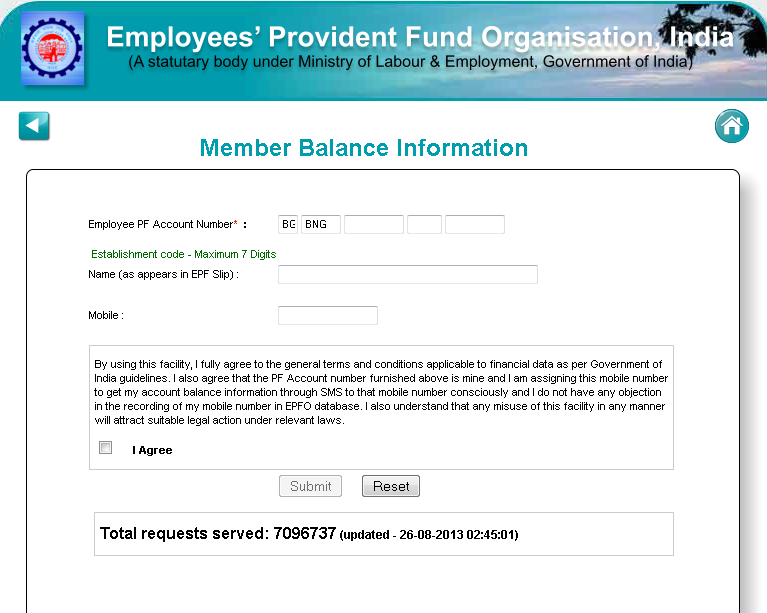
Read our Previous Post

Tuesday, January 27, 2009

I am what I am because of who we all are- Use Ubuntu

There are many websites where you can find information on Ubuntu and also a lot of documentation is available. In this post my aim is not to provide in depth information on Ubuntu or share anything new, but to spread awareness among friends and ordinary users about Ubuntu.

Ubuntu means humanity to others is a community based Linux distribution suitable for desktops and personal computer users. Ubuntu is free of charge and you can share Ubuntu with friends, modify or redistribute it.Ubuntu has its origins in Africa and now grown to a popular choice as a Linux distribution all over the world.

I am using the Ubuntu Linux distribution for the past few months and it meets all the requirements of a normal user. You really don't have to be a geek to start using Ubuntu.If you want to migrate from Windows to Linux, it is an ideal choice. The latest version of Ubuntu is 8.10 and you can download it free from the internet or request for shipping a CD.

You can use the following link to get Ubuntu:

http://www.ubuntu.com/getubuntu

If you want to see how it looks like you can use a live CD that allows you to load Ubuntu on a Windows machine with out installing Ubuntu.

Ubuntu also has the advantage that it supports many regional languages.I already tried enabling the support for Kannada and Malayalam. Before you login to your system, you can choose the language for that session.

Ubuntu philosophy is based on the following ideals:

1. Every computer user should have the freedom to download, run, copy, distribute, study, share, change and improve their software for any purpose, without paying licensing fees.
2. Every computer user should be able to use their software in the language of their choice.
3. Every computer user should be given every opportunity to use software, even if they work under a disability.


Another interesting thing is it helps you to easily manage installing and updating the software applications.
It comes with the synaptic package manager that helps you to easily install, remove and update software applications using a GUI.

Installing Ubuntu is very simple, but you need 4-8GB free disk space on your harddisk and 1GB RAM. In most modern laptops you can easily install Ubuntu. You can install Ubuntu as dual boot on a machine that has Windows pre-installed so that you can choose which operating system you want to use. Dual boot installation on Windows XP pre-installed seems to be non problematic compared to a dual boot installation on Windows Vista. Once I tried to install Ubuntu as dual boot on a Windows Vista machine the installation was failed. The problem was not with Ubuntu, but because the dealers installed Windows Vista on a single partition and no space is left free to install another operating system. The only option left for you is to shrink the current partition. It is sometimes problematic. So when you first install Windows you need to leave some free space or create two or three partitions that can be used later for Linux installation.

If I summarize following are the main advantages of using Ubuntu:

1. Usability for normal users
2. Ease of installation
3. Regional language support
4. Strong community support
5. Release cycle of an updated version every six months

Start using Ubuntu and enjoy the fun ...

Links:
Official Website: http://www.ubuntu.com
Ubuntu documentation: https://help.ubuntu.com/
Read our Previous Post